
The principle
How does it work?
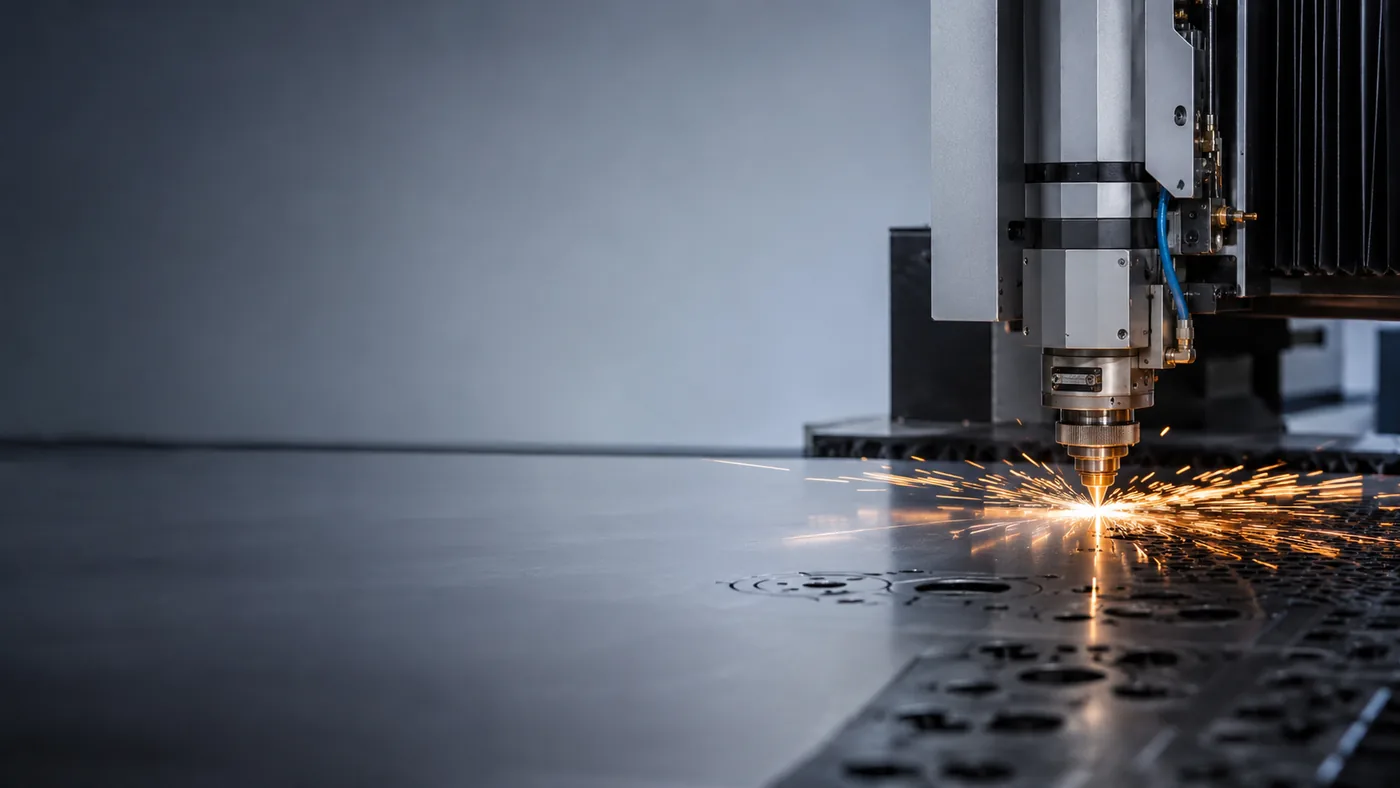
The part drawing is converted into a digital toolpath. The cutting head focuses the beam on the sheet and moves without mechanical contact to create contours, holes, and complex shapes.
Industrial application
What the buyer should clarify
A suitable technology must match the parts, volumes, production environment, and resources available on site.
Typical uses
Cutting sheet, plate, contours, holes, nested parts, and components ready for assembly.
Typical materials
Carbon steel, stainless steel, aluminium, copper, and brass depending on source, power, and configuration.
Typical industries
Metal fabrication, industrial equipment, automotive, agricultural equipment, and general manufacturing.
Before buying
Points to check
- Material and thickness range
- Volume and part variety
- Edge quality and tolerances
- Assist gases and consumption
- Electrical supply and cooling
- Maintenance, spare parts, and software
- Operator training and material handling
Choose with perspective
When laser may not be the best option
Plasma, punching, sawing, or machining may be more suitable for some thick materials, simple geometries, low utilization, or site work.
Industrial benefits
The main advantages
The value of the process is measured through achieved quality, production time, and the operations it can remove or simplify.
Precision
A narrow kerf supports fine details and complex geometries.
Productivity
High cutting speeds, particularly on thin and medium sheet.
Flexibility
Changing the file is often enough to move to a different part.
Less finishing
Clean edges can reduce deburring and secondary finishing.
Material, thickness, assist gas, and power should be validated on representative parts.